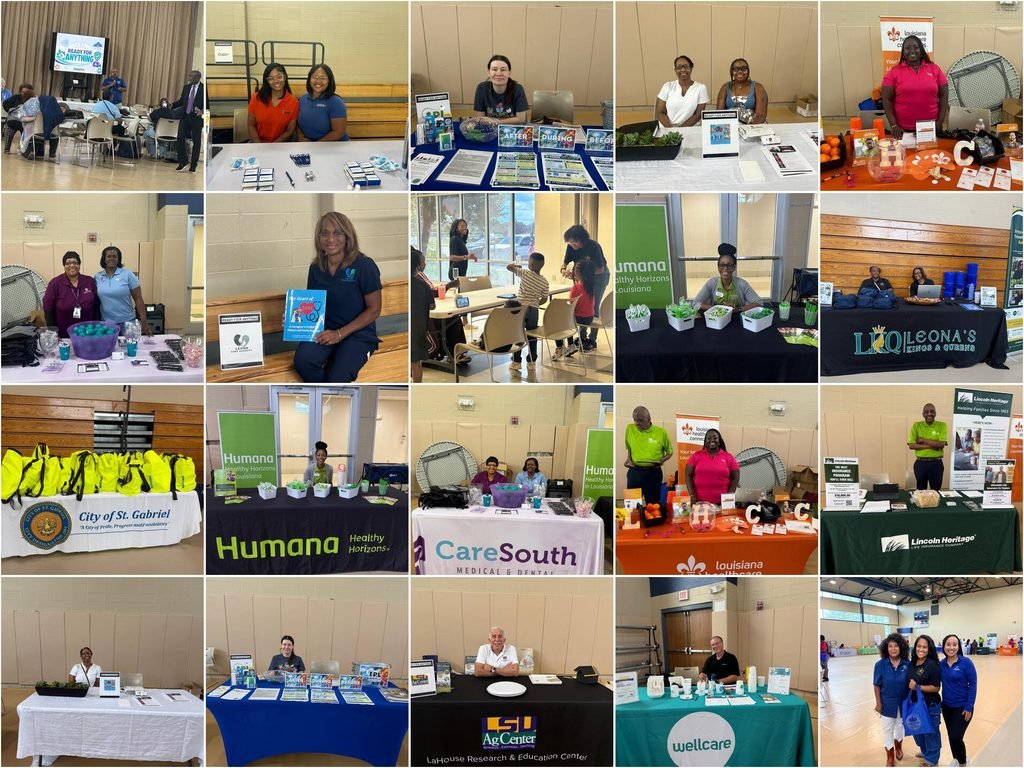
Residents connected with emergency-planning, healthcare and community organizations during a family-focused morning devoted to preparing before, during and after a disaster.
Bright yellow emergency bags lined a table bearing the City of St. Gabriel seal as families moved between information stations inside the Saint Gabriel Community Center. Children participated in activities while parents gathered preparedness materials, spoke with community representatives and considered an important question: Would their household know what to do if an emergency happened today?
That question was at the heart of the Ready for Anything: Family Disaster Prep & Recovery Workshop, held Saturday, September 5, at the Saint Gabriel Community Center.
Presented by Ready Together, the free workshop was created to help residents protect their families and develop practical plans for the moments before, during and after an emergency. The event welcomed children, allowing preparedness to become a conversation for the entire household rather than a responsibility left to adults alone.
As outlined in the original event announcement, the workshop was supported by the City of St. Gabriel, Randall Johnson, Leona’s Kings & Queens and participating community partners.
Turning Preparedness Into Action
Throughout the event, families had opportunities to learn, ask questions and collect information they could take home.
The workshop focused on the practical steps households can complete before severe weather or another emergency occurs. Those steps include identifying where family members will meet, deciding how they will communicate, gathering essential supplies and understanding where to find reliable information.
Preparedness materials displayed at the event addressed what residents should do before, during and after a storm. Tables featured guidance on hurricane readiness, recovery resources, health concerns and family safety.
For residents of South Louisiana, these lessons carry particular importance. Hurricanes, flooding, extended power outages and extreme heat can quickly interrupt daily life. A written household plan, emergency contacts and a properly stocked supply kit can help families respond with greater confidence when conditions change.
The workshop transformed those recommendations from an abstract checklist into a community experience where residents could speak directly with organizations prepared to help.
Community Partners Bring Resources Under One Roof
Organizations represented at the event included the Louisiana Department of Health, Iberville Parish Library, Louisiana Healthcare Connections, Humana Healthy Horizons in Louisiana, CareSouth Medical & Dental, Wellcare and the LSU AgCenter’s LaHouse Research and Education Center.
Leona Care Academy and Leona’s Kings & Queens also participated, along with representatives offering information related to insurance, family support and community resilience.
Each table brought a different piece of the preparedness picture.
The Iberville Parish Library displayed storm-planning guides organized around the stages before, during and after a disaster. The LSU AgCenter’s LaHouse program provided information related to safer, stronger homes and hurricane-resistant construction. Healthcare organizations shared materials addressing medical coverage, wellness and access to care.
Leona Care Academy presented caregiver resources, highlighting another important part of emergency planning: preparing for the needs of older adults, people with disabilities and family members who depend on ongoing care.
Together, the participating organizations demonstrated that disaster readiness involves more than storing food and water. It also means planning for medical needs, protecting important documents, strengthening homes, understanding insurance and knowing which local resources are available during recovery.
Children Included in the Conversation
The family-friendly format gave younger residents a place in the preparedness process.
Photographs from the event show children participating in a hands-on activity alongside adults and event volunteers. That involvement matters because children who understand an emergency plan may be better prepared to follow instructions and remain calm during an unfamiliar situation.
Including children also encourages families to discuss where they would go, whom they would contact and what each person should do if household members became separated.
Rather than presenting disaster planning as something frightening, the workshop created an approachable environment where families could learn together.
Preparedness Families Can Carry Home
One of the most visible features of the event was a collection of high-visibility emergency bags prepared for participants. Information tables also offered printed guides, health resources and practical items intended to keep preparedness at the front of residents’ minds after the workshop ended.
These take-home materials reinforced a central message of the event: readiness is not completed in a single morning.
Families must review their plans, update emergency contacts, replace expired supplies and account for changing medical or household needs. A plan should also include arrangements for children, older relatives, pets and anyone who may require additional assistance during an evacuation or power outage.
Even a few basic preparations can make a meaningful difference:
- Establish a household communication and meeting plan.
- Keep medications, identification and insurance information accessible.
- Prepare water, nonperishable food, flashlights, batteries and first-aid supplies.
- Monitor trusted local weather and emergency alerts.
- Know evacuation routes and where family members will go if they must leave home.
- Check on relatives and neighbors who may need additional support.
A More Resilient St. Gabriel
The Ready for Anything workshop showed what community preparedness can look like when local government, health organizations, educators, businesses and families gather in the same room.
Residents did not simply receive warnings about what could go wrong. They were connected with people, information and tools that could help them take the next step.
That community-centered approach is especially valuable because recovery rarely happens alone. Neighbors check on one another, organizations distribute resources and local leaders help connect residents with assistance.
By bringing those relationships together before the next emergency, St. Gabriel is helping families move from uncertainty toward readiness.
The workshop may have lasted only a few hours, but its most important work will continue at home—when families use what they learned to create a plan, prepare their supplies and make sure every member of the household knows what to do.
In a community accustomed to watching the weather, “ready for anything” is more than the name of an event. It is a commitment to being informed, connected and prepared together.